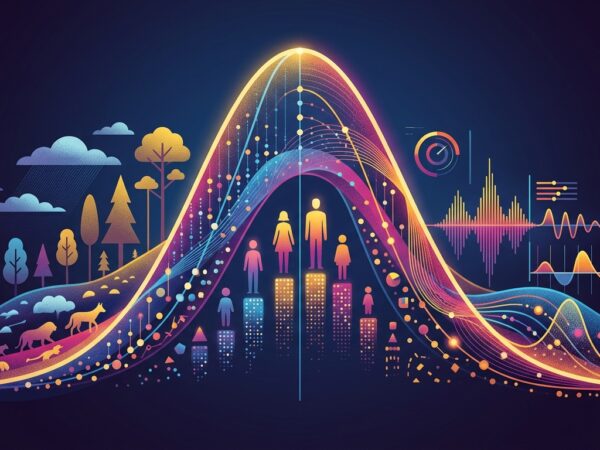
There is a shape that appears in the height of soldiers measured by 19th-century army physicians, in the noise patterns of electronic circuits, in the weight of apples picked from a single orchard, and in the scores of millions of students sitting for the same exam. It curves up toward a single peak, descends symmetrically on both sides, and tapers into thin tails that never quite touch zero. To a statistician, it is simply the Normal Distribution. To the world at large, it is the hidden architecture beneath an enormous swath of reality.
Read More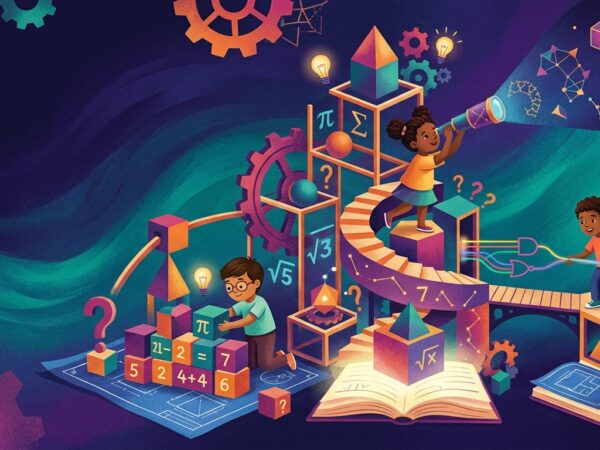
How Personality Shapes a Child’s Journey into Mathematics
For generations, mathematics education has been dominated by a single method: direct instruction of abstract symbols followed by repetitive drill. A teacher writes “3 × 4 = 12” on a board, a student copies it, and the hope is that meaning will arrive eventually. For a narrow band of learners—particularly those with strong sequential processing—this approach works well enough. For the majority, it produces confusion, frustration, and the catastrophic belief that mathematics is simply beyond them.
Read More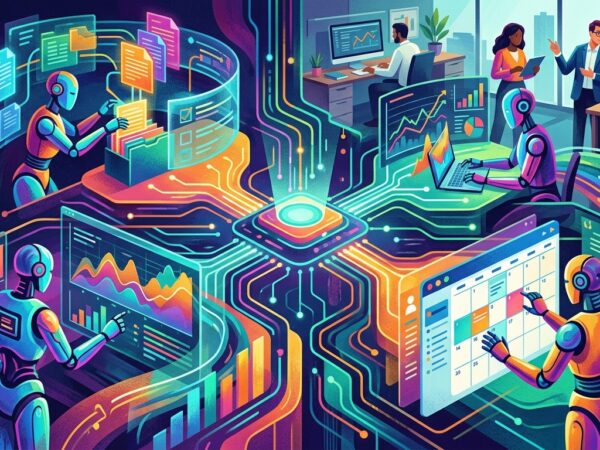
AI Agents In The Office
Cast your mind back to the early days of the smartphone. The first generation of mobile apps were essentially desktop websites squeezed onto a small screen — they looked the part but fundamentally behaved the same way. It took years before developers began exploiting GPS, the accelerometer, and push notifications to build experiences that were genuinely mobile-native. We are living through an almost identical transition with artificial intelligence today.
Read More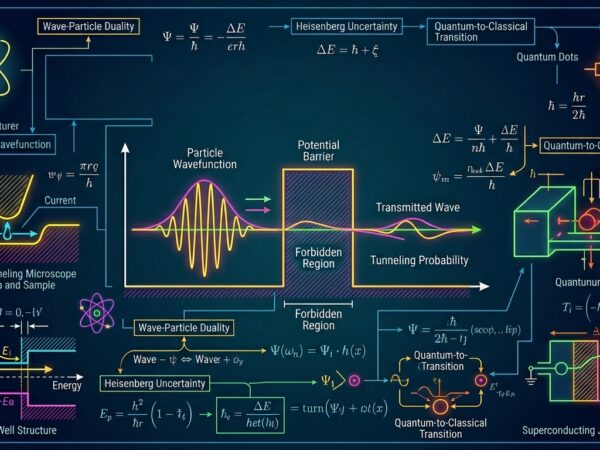
How Particles Break the Rules
Imagine throwing a tennis ball against a solid, ten-foot-thick brick wall. Classical physics—the science of the everyday world formulated by Isaac Newton—dictates a highly predictable outcome. The ball, lacking the physical energy to smash through the bricks, will simply bounce back. This is intuitive. It aligns with our daily, macroscopic experience. In the realm of classical physics, objects require sufficient energy to overcome obstacles.
Read More
Montessori vs. Waldorf vs. Reggio Emilia: A Parent’s Guide
Choosing an educational path for a child is among the most consequential decisions any parent or guardian will ever face. In an era increasingly dominated by standardized testing, algorithmic tracking, and performance benchmarking, a quiet revolution has been underway for over a century—one that insists children are not vessels to be filled, but fires to be lit. Three educational philosophies sit at the heart of this revolution: Montessori, Waldorf, and Reggio Emilia.
Read More
Koenigsegg and the Future of Speed
In 1994, a 22-year-old Swede named Christian von Koenigsegg picked up a pencil and drew a car. Not a fantasy — a plan. He intended to build a world-class supercar in a country with no heritage in high-performance manufacturing, competing against marques with decades of mythology behind them. Ferrari had Enzo. Lamborghini had a founding story rooted in defiance. Koenigsegg had audacity.
Read More
SR-71 Blackbird – Cold War Reconnaissance Legend
On a clear afternoon over the Mojave Desert, an air traffic controller glanced at his radar scope and blinked. The blip crossing his screen was moving at 1,942 knots — nearly 2,200 miles per hour. Below him, a Navy F/A-18 pilot had just been humbled into silence. Above him, at 85,000 feet, the crew of a Lockheed SR-71 Blackbird were simply doing their job.
Read More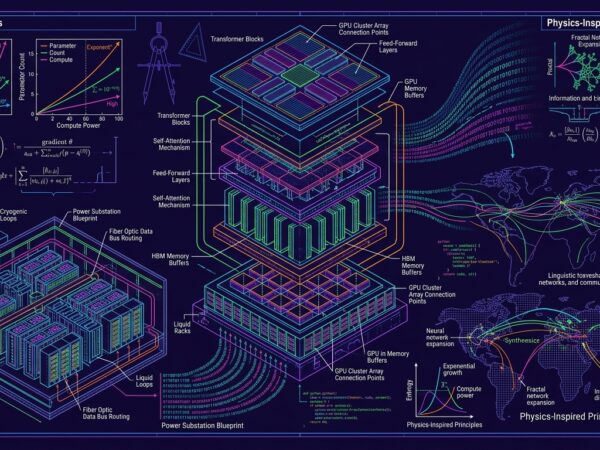
The Hidden Math Powering the AI Revolution
In the last decade, humanity has witnessed a shift in computing as profound as the invention of the internet itself. Large Language Models (LLMs) have transformed from laboratory curiosities into systems capable of creative writing, complex reasoning, and personalized tutoring at scale. Yet beneath the conversational surface of tools like ChatGPT and Claude lies a rigorous world of high-dimensional mathematics, physics-inspired scaling laws, and extraordinary industrial engineering. Understanding how these models work requires looking past the magic and into the architecture itself.
Read MoreGreen Computing in the Digital Age
In the early days of the internet, we viewed the “cloud” as a weightless, ethereal place where data lived in harmony with nature. But as we move through 2026, the reality is much heavier. Every email sent, every AI query typed, and every video streamed relies on a massive physical network of “digital factories” called data centers. These buildings hum with thousands of servers, and their hunger for electricity is reshaping our planet’s energy map.
Read More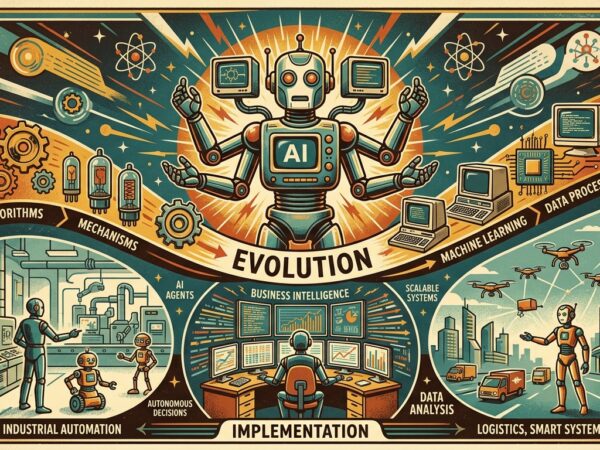
AI Agents: Creation, Use, Future
Imagine hiring a brilliant new employee. You don’t hand them a step-by-step manual for every conceivable situation — you describe what needs to be accomplished, give them access to the right resources, and trust them to figure out the rest. That is, in essence, what an AI agent does. And understanding this shift — from software we use to software that works for us — is perhaps the most important technological literacy skill of our time.
Read More