
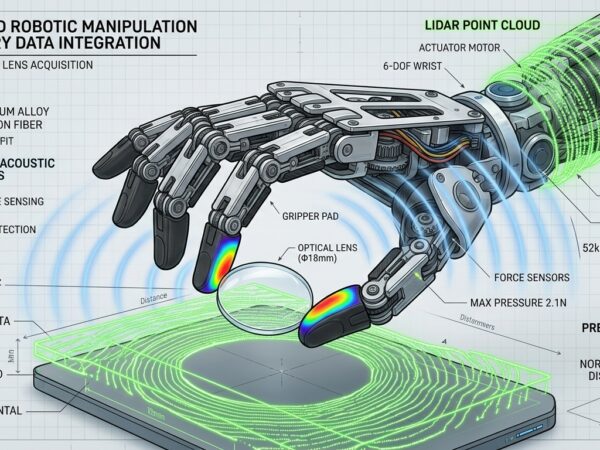
There is a moment that every researcher in personal robotics has witnessed — usually during a late-night demo, in a lab that smells of solder and cold coffee — when a robot arm reaches for a paper cup and something almost miraculous happens. The fingers close around it with exactly the right pressure: firm enough to lift, gentle enough not to collapse the sides, attentive enough to sense the sloshing weight of liquid inside and make a hundred tiny corrections nobody programmed explicitly. The robot does not drop the cup. The researchers exhale.
Read More
Wi-Fi Sensing and the Future of Ambient Intelligence
Every time you connect a device to your Wi-Fi network, invisible waves radiate outward from your router at the speed of light, bouncing off walls, furniture — and you. For decades, the engineers who designed these wireless systems treated those reflections as a nuisance. They were noise. Static. The unavoidable cost of trying to move data through a world full of physical objects.
Read More
Inside the AI Revolution of Engineering
Look closely at a modern jet turbine blade or the spidery internal lattice of a 3D-printed titanium hip implant and you will notice something deeply strange: these objects do not look like things human beings drew. Their surfaces undulate with a biological logic—the efficient, load-tracing curves of a femur, the branching arches of a nautilus shell. They look, in short, like things that evolved rather than things that were engineered. This is not coincidence. It is the most visible face of one of the most consequential transformations in the history of applied science.
Read More
Koenigsegg and the Future of Speed
In 1994, a 22-year-old Swede named Christian von Koenigsegg picked up a pencil and drew a car. Not a fantasy — a plan. He intended to build a world-class supercar in a country with no heritage in high-performance manufacturing, competing against marques with decades of mythology behind them. Ferrari had Enzo. Lamborghini had a founding story rooted in defiance. Koenigsegg had audacity.
Read More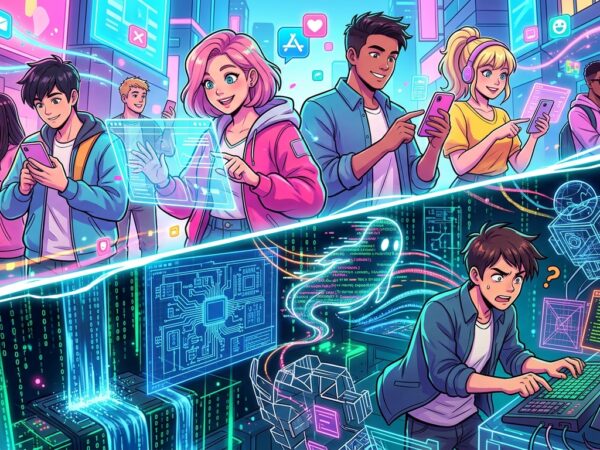
Bridging Tech Literacy Gaps
In the second decade of the 21st century, we find ourselves in a peculiar “Glass Paradox”. We are surrounded by screens—from the “Digital Natives” of Gen Z who adopt technology instantaneously to the 90% of Baby Boomers who owned smartphones by 2025[cite: 5]. Yet, a profound gap exists between consumption and creation. While millions can navigate a social media interface with their eyes closed, a much smaller percentage understands the programming logic that drives it.
Read More