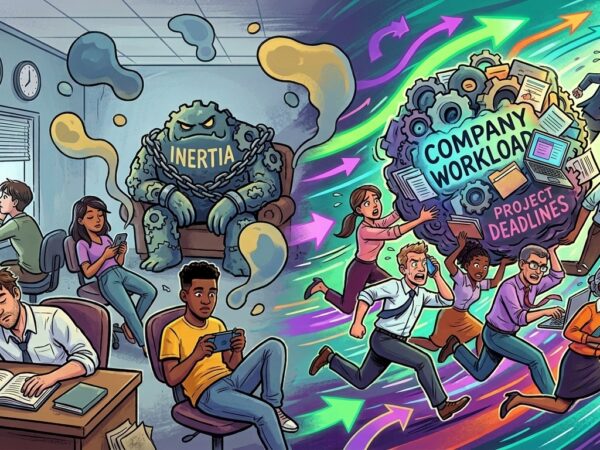
In almost every organization of meaningful size, the same two complaints circulate quietly, usually not to management: one employee has been visibly coasting for over a year with no consequence, and another has been quietly absorbing that person’s overflow on top of their own workload, without a corresponding raise, title, or thank-you. Both observations are usually correct. What is less obvious is that neither one is really a story about character. It is a story about arithmetic.
Read More
You Probably Don’t Learn the Way You Think You Do
The idea that a person has one dominant, fixed “learning style” — and that teaching to it measurably improves how well they learn — is one of the most rigorously tested, most repeatedly falsified, and most stubbornly persistent ideas in education. It is worth understanding not because learning styles are uniquely embarrassing as far as debunked theories go, but because the shape of its failure teaches something more durable than the myth itself: how a plausible-sounding idea gets built into policy, training, and even identity before the evidence has a chance to catch up.
Read More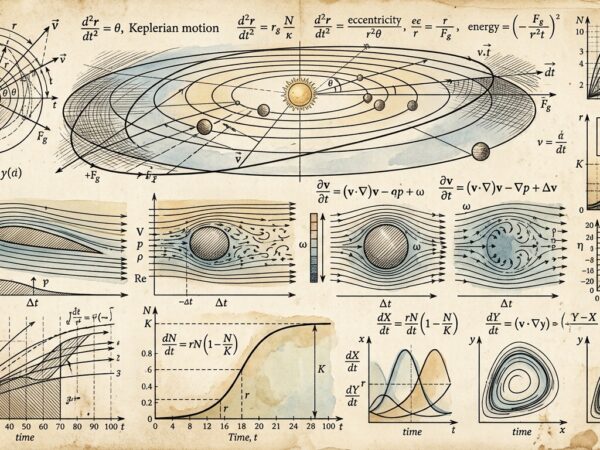
The Mathematics of Change
Every falling object, cooling cup of coffee, decaying isotope, and spreading epidemic obeys the same underlying logic: change does not happen all at once — it happens at a rate, and that rate is itself a function of the system’s current state. A differential equation is the formal sentence that records this fact. What follows traces how that sentence was invented out of necessity in the late seventeenth century, defines its working vocabulary in plain language, solves one completely by hand — the decay of radioactive carbon — and surveys the circuits, organisms, and economies still running on it today.
Read More
Two labels — the “alpha male” and the “sigma male” — have become shorthand for two competing pictures of dominant manhood: one loud and commanding, the other quiet and aloof. This article shows that both labels rest on a piece of animal science that was overturned decades ago, and that neither names a real personality type. What is real is the machinery underneath them: a set of well-documented mental shortcuts that cause us to mistake volume and certainty for accuracy. We trace where the words came from, define the technical terms precisely, work through a simple numerical example, and replace the folk taxonomy with the model researchers actually use.
Read More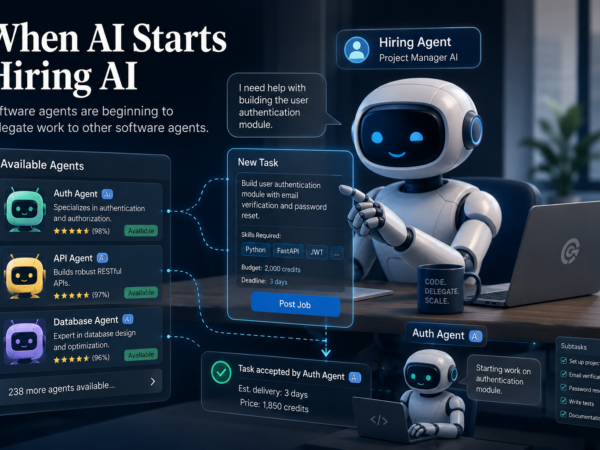
For roughly a month in the spring of 2025, a small refrigerated shop inside Anthropic’s San Francisco office was run by an artificial intelligence. The shopkeeper was a version of the Claude language model, nicknamed Claudius. It chose products, set prices, emailed suppliers, and answered customers over the company’s chat system. No human held the role of manager. The machine was, in the most literal sense, in charge.
Read More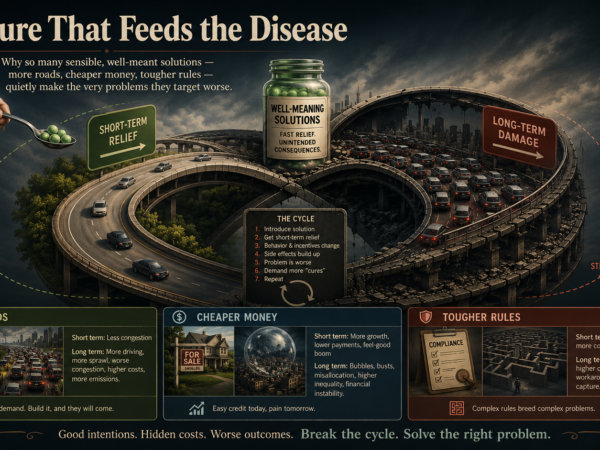
A recurring pattern appears across traffic, housing, health care, education, and online platforms: a direct, reasonable intervention produces short-term relief, then the original problem returns — sometimes larger than before. This essay argues that the cause is not incompetence or bad intentions but structure. Social systems are networks of cause and effect that loop back on themselves, often with long delays. We will define the working parts of such a system, derive step by step how a sensible fix can be reversed by the system’s own response, work a real numerical example from road building, and close with the open question that systems scientists still cannot fully answer: where, exactly, should we push?
Read More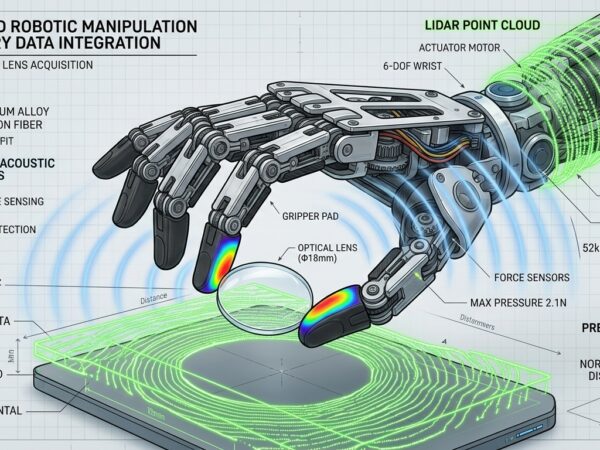
The Thousand-Millisecond Hand
There is a moment that every researcher in personal robotics has witnessed — usually during a late-night demo, in a lab that smells of solder and cold coffee — when a robot arm reaches for a paper cup and something almost miraculous happens. The fingers close around it with exactly the right pressure: firm enough to lift, gentle enough not to collapse the sides, attentive enough to sense the sloshing weight of liquid inside and make a hundred tiny corrections nobody programmed explicitly. The robot does not drop the cup. The researchers exhale.
Read More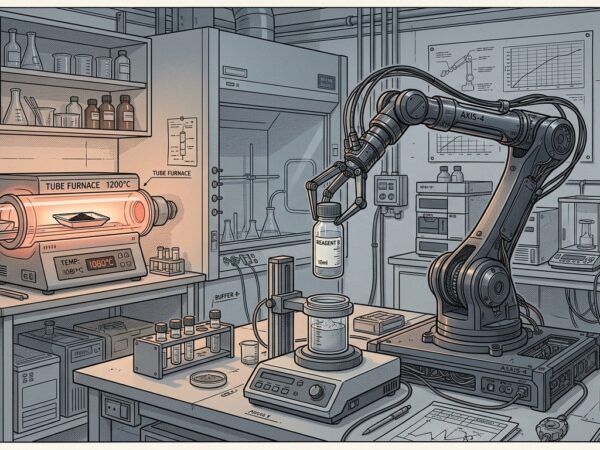
The Laboratory That Designs Its Own Next Question
A room where the work continues after everyone goes home
Walk into a certain kind of laboratory at two in the morning and you will find no one there, and yet the work is not paused. A robotic arm lifts a vial, mixes a precise dose of one powder into another, slides a sample into a furnace, and waits. Hours later an instrument measures what came out. Somewhere in a server, a program reads that measurement, compares it against everything the machine has tried so far, and decides — entirely on its own — what the next experiment should be.
Read More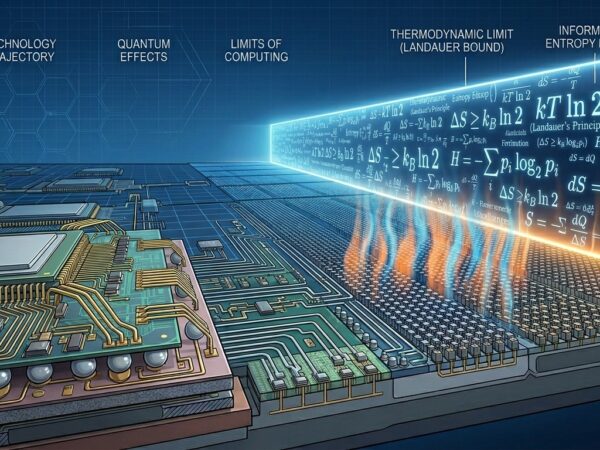
Limits of Computation?
For sixty years, the number of transistors on a chip doubled at a steady rate — a pattern called Moore’s Law. That doubling has slowed. This article reconstructs why. We separate two very different kinds of limit: the engineering limits (heat, electrical leakage, the cost of printing ever-tinier patterns) and a single physical limit set by the laws of thermodynamics. We will define every term as we go, derive the physical floor of computation from first principles with arithmetic you can check by hand, and then ask the honest question: when computers stop getting faster, which wall did we hit?
Read More
Why do Experts Perceive More?
A few years ago, I sat in a hospital reading room watching a first-year radiology resident review a chest scan beside her attending physician. The resident worked the way you or I would: slowly, methodically, square inch by square inch, visibly straining to hold everything in mind. The attending glanced at the same image for perhaps two seconds and said, quietly, “Look at the lower left lobe.”
Read More