

In the second decade of the 21st century, we find ourselves in a peculiar “Glass Paradox”. We are surrounded by screens—from the “Digital Natives” of Gen Z who adopt technology instantaneously to the 90% of Baby Boomers who owned smartphones by 2025[cite: 5]. Yet, a profound gap exists between consumption and creation. While millions can navigate a social media interface with their eyes closed, a much smaller percentage understands the programming logic that drives it.
Read More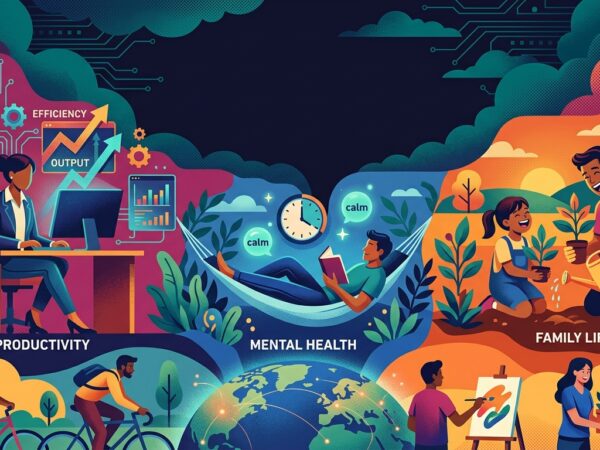
The 4-Day Workweek Revolution
The 4-day workweek is not simply “taking Friday off.” The most successful model follows the 100‑80‑100 rule: 100% pay, for 80% of the time, in exchange for 100% productivity maintained.
Read More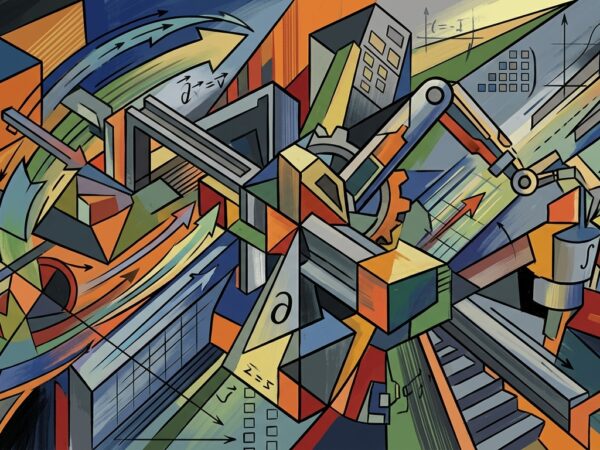
The Jacobian Matrix
Few mathematical constructs sit as quietly beneath the surface of modern technology as the Jacobian matrix — and yet, once you learn to see it, it appears everywhere. It governs the motion of a robotic arm assembling a car. It enables a spacecraft to orient itself in orbit. It drives the back-propagation algorithm that trains nearly every large neural network you interact with. It is the mathematical bridge between a system’s inputs and its outputs, between coordinates and forces, between the abstract and the real.
Read More
How overconfidence undermines teams and organizations
In 1999, Cornell University psychologists David Dunning and Justin Kruger published a landmark study that would reshape how we understand human self-assessment. Testing participants on logic, grammar, and humor, they found something remarkable: those who scored in the bottom quartile — placing on average in the 12th percentile — believed they were performing at the 62nd percentile. They didn’t just overestimate themselves by a little. They were profoundly, systematically wrong about their own abilities, and they had no idea.
Read More