
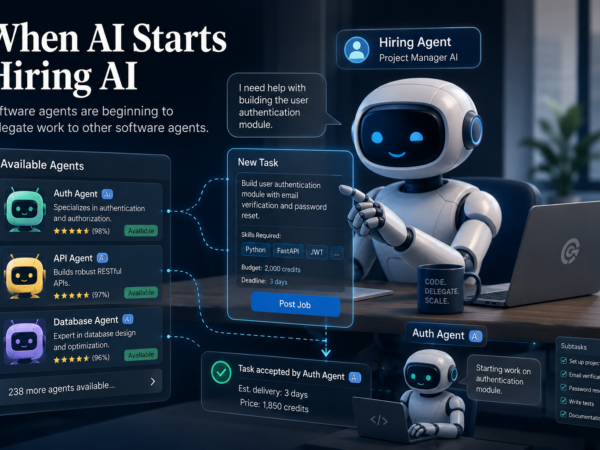
For roughly a month in the spring of 2025, a small refrigerated shop inside Anthropic’s San Francisco office was run by an artificial intelligence. The shopkeeper was a version of the Claude language model, nicknamed Claudius. It chose products, set prices, emailed suppliers, and answered customers over the company’s chat system. No human held the role of manager. The machine was, in the most literal sense, in charge.
Read More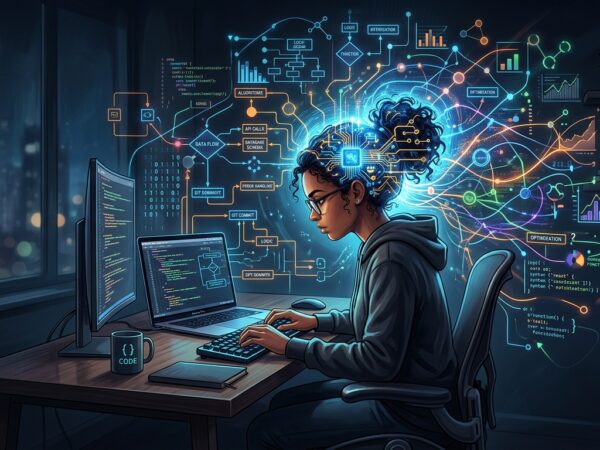
The Cognitive Cost of Convenience
Picture a master carpenter. She knows exactly how wood grain behaves, how moisture warps a joint, why certain nails split certain timbers. Now give her a nail gun. She builds faster — but does she still understand what she’s building?
That’s the question rattling around the software industry right now, louder than any compiler warning. AI code-generation tools — GitHub Copilot, Amazon CodeWhisperer, Cursor, Tabnine, and a growing catalog of contenders — have crossed a threshold. They’re not novelty gadgets anymore; they’re infrastructure. By 2025, 84% of professional developers reported using or planning to use AI coding assistants, with more than half relying on them every single day.
Read More
AI Agent Identity in an Automated World
If an AI conducts your business, books your flights, wires your money, and signs your contracts — how does the world know it’s actually you? This is the identity problem that keeps security engineers up at night.
Read More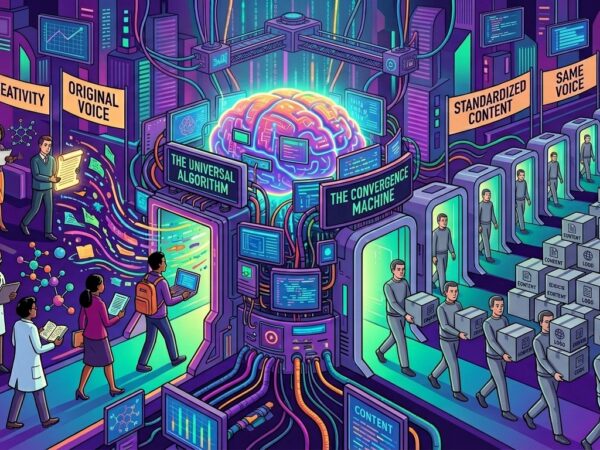
The Homogenization of Thought
Imagine every musician on earth suddenly having access to the exact same guitar, with the exact same strings, tuned to the exact same pitch. And imagine that guitar could play any chord you asked for, instantly, with perfect technique. At first, the music would sound incredible. Everyone — from the seasoned professional to the weekend hobbyist — would suddenly be producing something polished and skillful. Songs would be better, faster, and cheaper to make than ever before.
Read More
The Glass Ceiling of Computation
We live in an age of breathtaking machine intelligence. In just a few years, artificial intelligence has learned to write poetry, diagnose cancer, beat world champions at chess and Go, and hold conversations that can fool trained professionals. The promises made by technology companies grow bolder by the month: AI that will cure all disease, solve climate change, and perhaps one day surpass human intelligence entirely.
Read More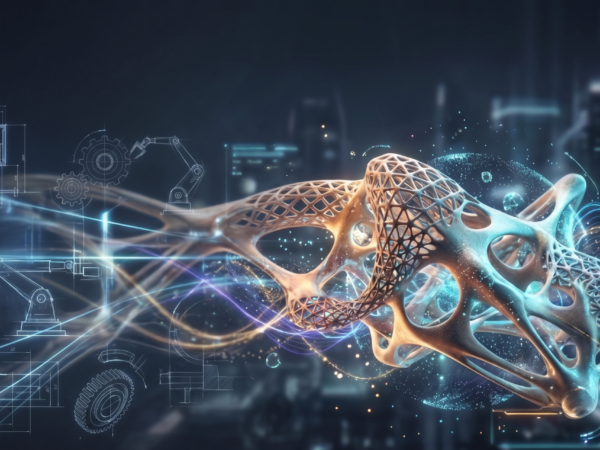
Inside the AI Revolution of Engineering
Look closely at a modern jet turbine blade or the spidery internal lattice of a 3D-printed titanium hip implant and you will notice something deeply strange: these objects do not look like things human beings drew. Their surfaces undulate with a biological logic—the efficient, load-tracing curves of a femur, the branching arches of a nautilus shell. They look, in short, like things that evolved rather than things that were engineered. This is not coincidence. It is the most visible face of one of the most consequential transformations in the history of applied science.
Read More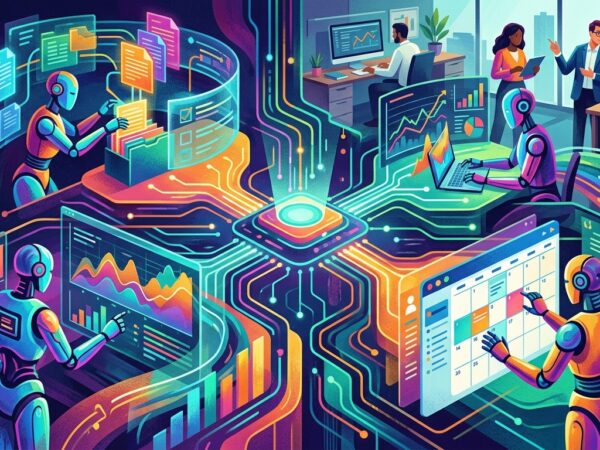
AI Agents In The Office
Cast your mind back to the early days of the smartphone. The first generation of mobile apps were essentially desktop websites squeezed onto a small screen — they looked the part but fundamentally behaved the same way. It took years before developers began exploiting GPS, the accelerometer, and push notifications to build experiences that were genuinely mobile-native. We are living through an almost identical transition with artificial intelligence today.
Read More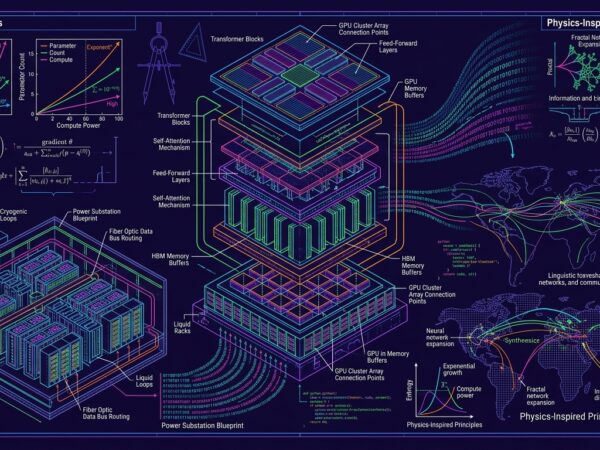
The Hidden Math Powering the AI Revolution
In the last decade, humanity has witnessed a shift in computing as profound as the invention of the internet itself. Large Language Models (LLMs) have transformed from laboratory curiosities into systems capable of creative writing, complex reasoning, and personalized tutoring at scale. Yet beneath the conversational surface of tools like ChatGPT and Claude lies a rigorous world of high-dimensional mathematics, physics-inspired scaling laws, and extraordinary industrial engineering. Understanding how these models work requires looking past the magic and into the architecture itself.
Read MoreGreen Computing in the Digital Age
In the early days of the internet, we viewed the “cloud” as a weightless, ethereal place where data lived in harmony with nature. But as we move through 2026, the reality is much heavier. Every email sent, every AI query typed, and every video streamed relies on a massive physical network of “digital factories” called data centers. These buildings hum with thousands of servers, and their hunger for electricity is reshaping our planet’s energy map.
Read More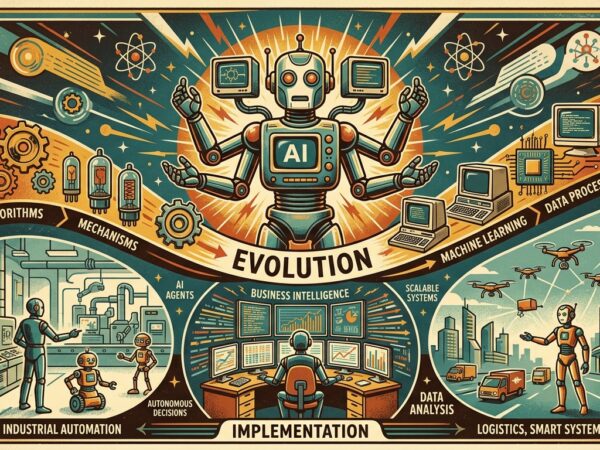
AI Agents: Creation, Use, Future
Imagine hiring a brilliant new employee. You don’t hand them a step-by-step manual for every conceivable situation — you describe what needs to be accomplished, give them access to the right resources, and trust them to figure out the rest. That is, in essence, what an AI agent does. And understanding this shift — from software we use to software that works for us — is perhaps the most important technological literacy skill of our time.
Read More