
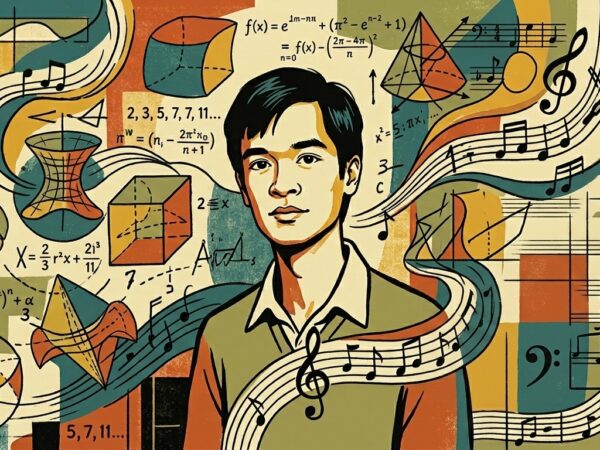
To understand why Terence Tao matters, you first need to appreciate the mathematical universe he operates in — a world whose foundations stretch back more than 2,000 years. The ancient Greeks were the first to formally study prime numbers (whole numbers divisible only by 1 and themselves: 2, 3, 5, 7, 11…), and the great geometer Euclid proved around 300 BCE that these primes go on forever with no end. Yet despite millennia of effort, the primes still guard secrets that have resisted every great mind that has ever lived.
Read More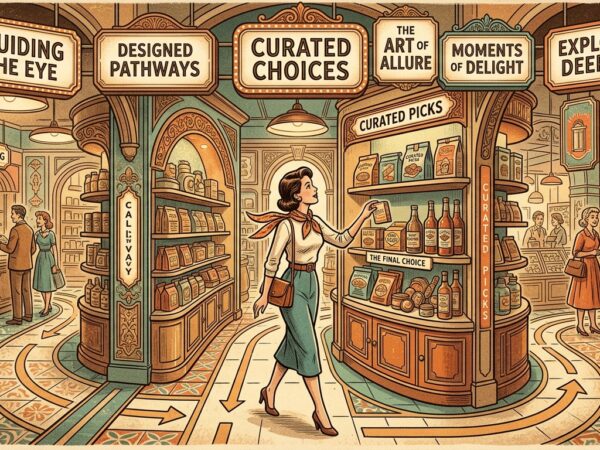
The Attention Trap
The moment you step through the front door of a store, something invisible takes over. You slow down at the threshold. Your eyes drift toward a color-blocked wall of merchandise. A particular smell reaches you — freshly baked bread, cedar, or cool clean air. The aisle feels wide enough to feel welcoming, but not so vast that you feel lost. You pick up an item. The weight of it feels right. Before you have consciously decided anything, the store has already begun to sell to you.
Read More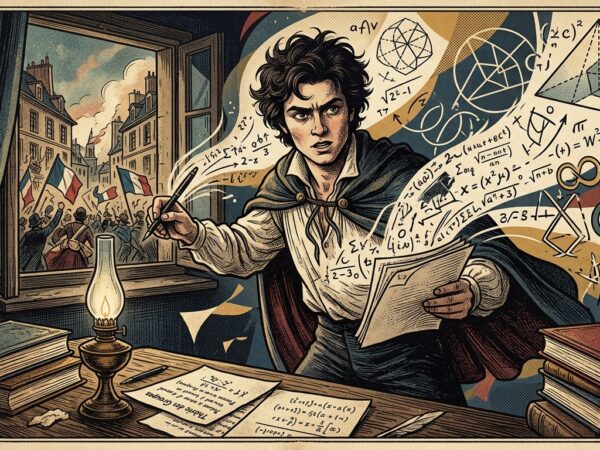
The Mathematical Revolution of Évariste Galois
To understand why Galois matters, we must begin with a problem that seems, on its surface, completely straightforward: can you find a formula that solves any polynomial equation? The answer, it turns out, depends entirely on the degree of the polynomial — and the story of how mathematicians discovered this is one of the most dramatic in the history of science.
Read More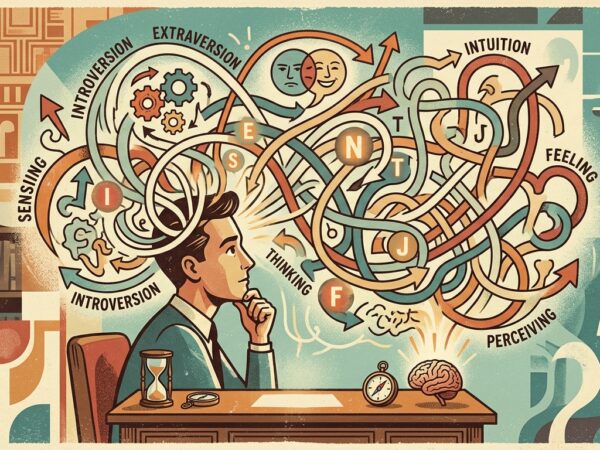
Why the World’s Most Popular Personality Test Remains So Controversial
Somewhere in an office park right now, a team of employees is sitting in a conference room, filling out a questionnaire about whether they prefer “lively parties” or “quiet evenings at home.” At the end of the session, each person will receive a four-letter code — something like INTJ or ENFP — and their manager will explain what it means for how the team should communicate. This ritual, repeated millions of times each year in boardrooms, universities, and military branches across the globe, is the Myers-Briggs Type Indicator, more commonly known as the MBTI.
Read More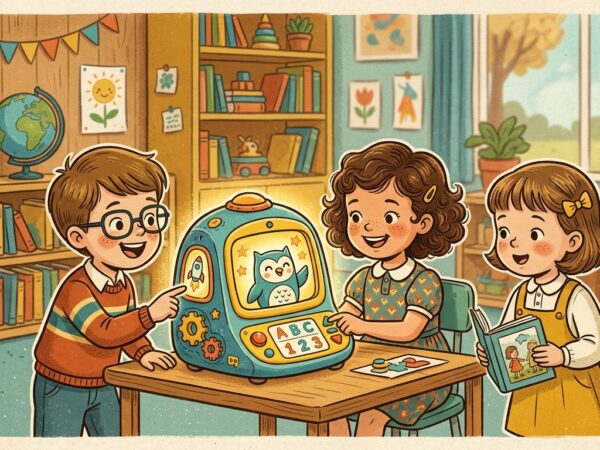
The Promise and Risks of AI in Early Education
Imagine a five-year-old named Maya sitting down at a tablet in her kindergarten classroom. The screen shows colorful animals and asks her to tap the ones with four legs. When Maya taps an eagle instead of a dog, the program doesn’t give her a big red X. Instead, it gently shows her the eagle flying, counts its legs together with her, and tries a slightly easier version of the question. Ten minutes later, Maya is laughing and has correctly identified animals with two legs, four legs, and six legs — something that might have taken days with a workbook. What Maya doesn’t realize is that a form of artificial intelligence has been quietly adapting to her specific learning pace, interests, and mistakes in real time.
Read More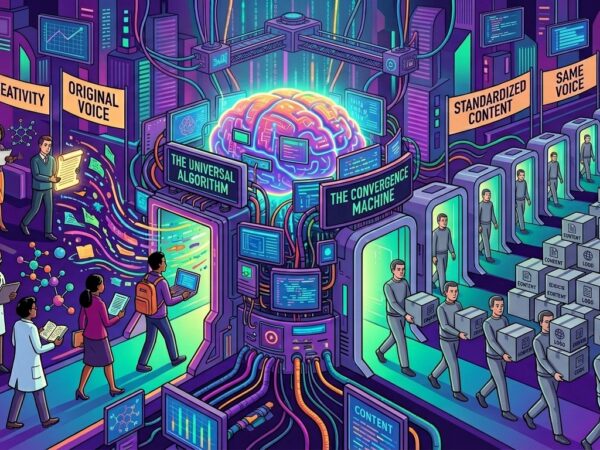
The Homogenization of Thought
Imagine every musician on earth suddenly having access to the exact same guitar, with the exact same strings, tuned to the exact same pitch. And imagine that guitar could play any chord you asked for, instantly, with perfect technique. At first, the music would sound incredible. Everyone — from the seasoned professional to the weekend hobbyist — would suddenly be producing something polished and skillful. Songs would be better, faster, and cheaper to make than ever before.
Read More
The Glass Ceiling of Computation
We live in an age of breathtaking machine intelligence. In just a few years, artificial intelligence has learned to write poetry, diagnose cancer, beat world champions at chess and Go, and hold conversations that can fool trained professionals. The promises made by technology companies grow bolder by the month: AI that will cure all disease, solve climate change, and perhaps one day surpass human intelligence entirely.
Read More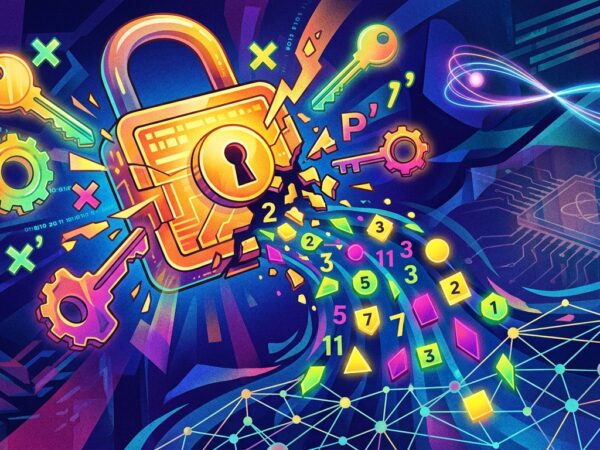
Unlocking the Mystery of Prime Factorization
Every time you load a web page over HTTPS, complete a bank transfer, or send an encrypted message, an ancient mathematical idea silently stands guard. That idea — prime factorization — was pondered by Greek geometers two millennia before electricity existed. Today it underpins roughly 90% of encrypted global internet traffic. And today, for the first time in its history, it faces an existential threat.
Read More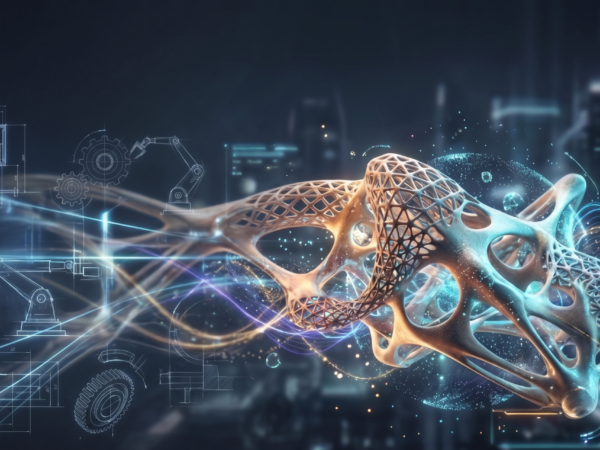
Inside the AI Revolution of Engineering
Look closely at a modern jet turbine blade or the spidery internal lattice of a 3D-printed titanium hip implant and you will notice something deeply strange: these objects do not look like things human beings drew. Their surfaces undulate with a biological logic—the efficient, load-tracing curves of a femur, the branching arches of a nautilus shell. They look, in short, like things that evolved rather than things that were engineered. This is not coincidence. It is the most visible face of one of the most consequential transformations in the history of applied science.
Read More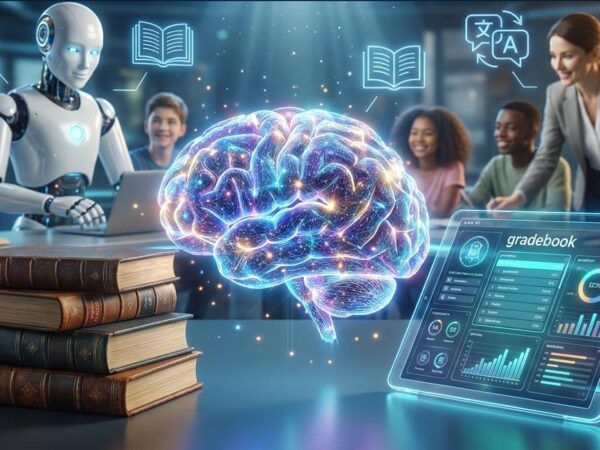
How Technology and AI Are Reshaping Education
Long before the first transistor was switched on, before fiber-optic cables threaded through city sidewalks, and centuries before any student typed a query into a chatbot, human beings were already trying to use technology to teach one another. The story of educational technology is, at its core, the story of human ambition: the persistent desire to transmit knowledge more efficiently, more accessibly, and more lastingly than word of mouth alone could achieve
Read More