
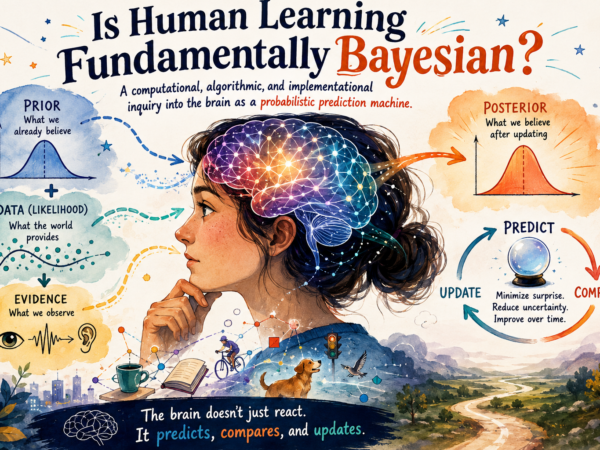
In 1867, a German physician and physicist named Hermann von Helmholtz proposed something audacious: that the human eye does not simply see the world. Instead, the brain constructs a best guess about the world by combining incoming light signals with stored memories and prior expectations. He called this process unconscious inference — a hidden, automatic calculation happening below the level of conscious thought, every single moment you are awake.
Read More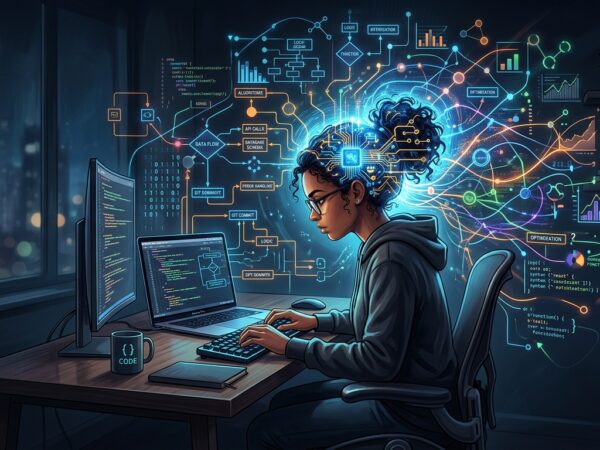
The Cognitive Cost of Convenience
Picture a master carpenter. She knows exactly how wood grain behaves, how moisture warps a joint, why certain nails split certain timbers. Now give her a nail gun. She builds faster — but does she still understand what she’s building?
That’s the question rattling around the software industry right now, louder than any compiler warning. AI code-generation tools — GitHub Copilot, Amazon CodeWhisperer, Cursor, Tabnine, and a growing catalog of contenders — have crossed a threshold. They’re not novelty gadgets anymore; they’re infrastructure. By 2025, 84% of professional developers reported using or planning to use AI coding assistants, with more than half relying on them every single day.
Read More
Hidden Patterns in a World of Information
Imagine you receive a box containing ten thousand marbles scattered in every direction. Each marble is a different color and carries a different number. You could count them. You could sort them by shade, average their values, map their distribution on a histogram. These are all legitimate moves in the classical statistician’s playbook
Read More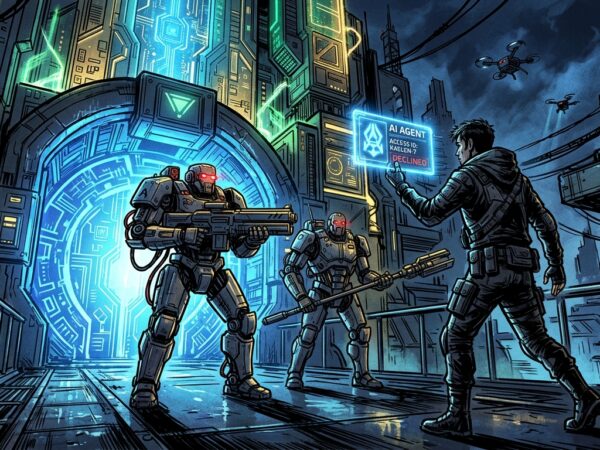
AI Agent Identity in an Automated World
If an AI conducts your business, books your flights, wires your money, and signs your contracts — how does the world know it’s actually you? This is the identity problem that keeps security engineers up at night.
Read More
How an Ancient Craft Shapes the Developing Brain
Imagine a craftsman seated near the Nile sometime around the eleventh century, working a pair of slim bone needles through loops of spun cotton. The resulting object — a sock with an elegantly split toe, designed to slide comfortably between a sandal strap
Read More
Order vs Chaos in Moving Fluids
Every fluid in motion — water flowing through a pipe, blood circulating through an artery, air sweeping over an aircraft wing — obeys one of two fundamental behavioral modes: laminar flow, characterized by orderly, parallel layers that slide past one another without mixing, or turbulent flow, defined by chaotic, swirling eddies and vigorous lateral mixing of fluid parcels.
Read More
Wi-Fi Sensing and the Future of Ambient Intelligence
Every time you connect a device to your Wi-Fi network, invisible waves radiate outward from your router at the speed of light, bouncing off walls, furniture — and you. For decades, the engineers who designed these wireless systems treated those reflections as a nuisance. They were noise. Static. The unavoidable cost of trying to move data through a world full of physical objects.
Read More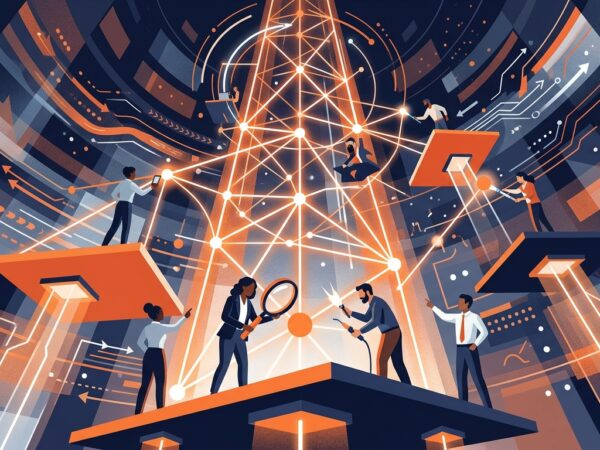
Ethics & Governance in the Age of the Black Box AI
Imagine you apply for a loan. You have worked hard, maintained your credit, kept the same job for three years. You submit your application with quiet confidence. Somewhere in a server farm, a mathematical formula runs your information through hundreds of variables, assigns you a number — and rejects you. Nobody explains why. The bank representative shrugs and says, “The computer said no.”
Read More
What is life?
There is a small room somewhere in a research facility in La Jolla, California, where a cell sits inside a flask. It is spherical, nearly featureless under a microscope — a pale, quivering smudge no larger than a thousandth of a millimeter. It has no brain, no nervous system, no evolutionary history stretching back through millions of years of natural selection. It was designed at a computer terminal. Its genome was assembled from bottles of chemical reagents. It was, in the most literal and deliberate sense of the word, built.
Read More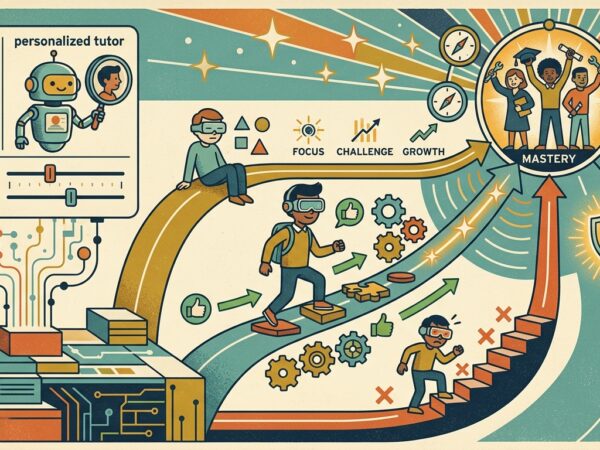
The Future of Learning
Imagine two students sitting side by side, both staring at the same math problem. One is bored — the concept is too easy. The other is panicking — it’s too hard. Neither is learning much. Now imagine a third student: a private tutor sitting across from a child, watching every flicker of confusion, every spark of understanding, and adjusting the next question in real time. That child thrives. The question modern education has wrestled with for decades is this: Can we build something that does that for everyone — at scale, at low cost, and without burning out a single human tutor?
Read More