
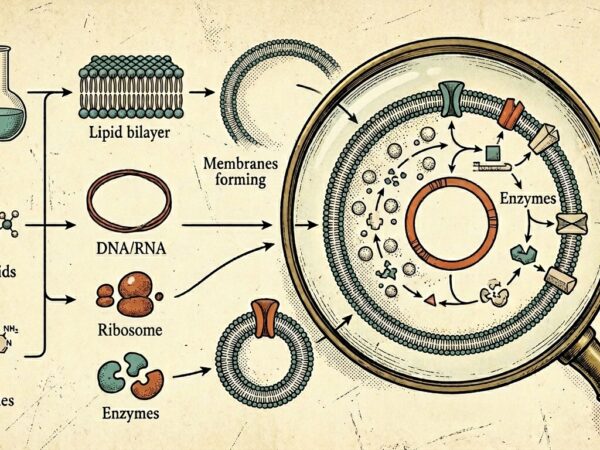
There is a small room somewhere in a research facility in La Jolla, California, where a cell sits inside a flask. It is spherical, nearly featureless under a microscope — a pale, quivering smudge no larger than a thousandth of a millimeter. It has no brain, no nervous system, no evolutionary history stretching back through millions of years of natural selection. It was designed at a computer terminal. Its genome was assembled from bottles of chemical reagents. It was, in the most literal and deliberate sense of the word, built.
Read More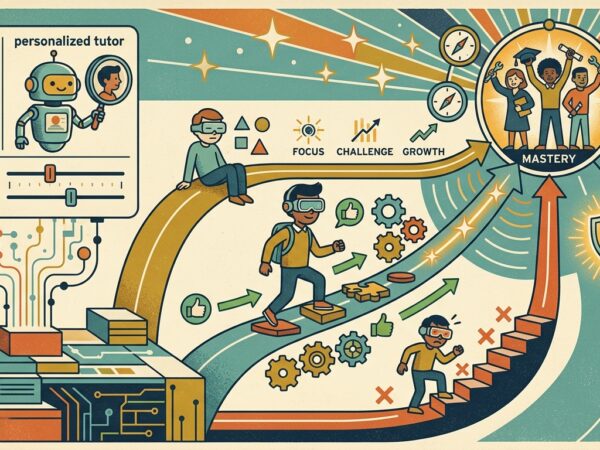
The Future of Learning
Imagine two students sitting side by side, both staring at the same math problem. One is bored — the concept is too easy. The other is panicking — it’s too hard. Neither is learning much. Now imagine a third student: a private tutor sitting across from a child, watching every flicker of confusion, every spark of understanding, and adjusting the next question in real time. That child thrives. The question modern education has wrestled with for decades is this: Can we build something that does that for everyone — at scale, at low cost, and without burning out a single human tutor?
Read More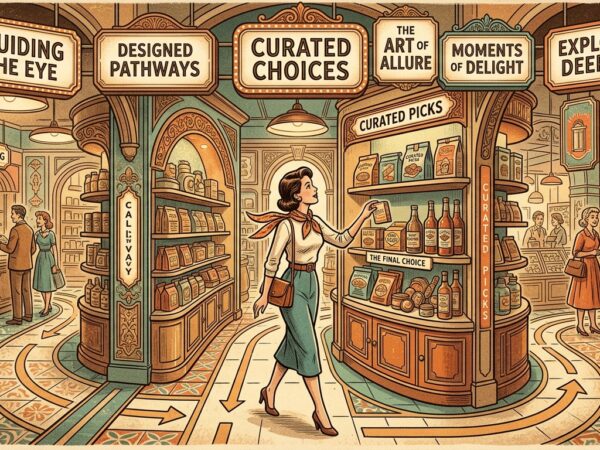
The Attention Trap
The moment you step through the front door of a store, something invisible takes over. You slow down at the threshold. Your eyes drift toward a color-blocked wall of merchandise. A particular smell reaches you — freshly baked bread, cedar, or cool clean air. The aisle feels wide enough to feel welcoming, but not so vast that you feel lost. You pick up an item. The weight of it feels right. Before you have consciously decided anything, the store has already begun to sell to you.
Read More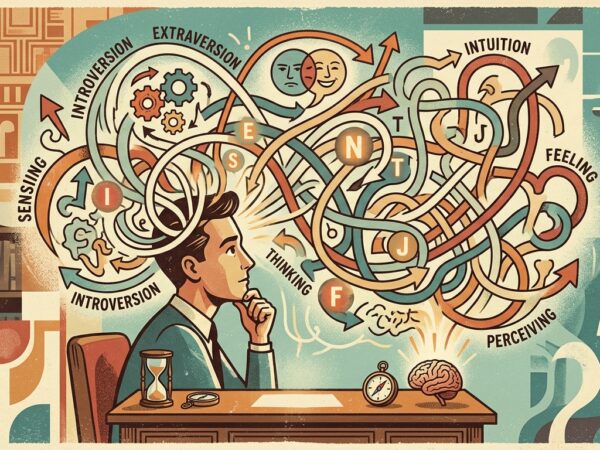
Why the World’s Most Popular Personality Test Remains So Controversial
Somewhere in an office park right now, a team of employees is sitting in a conference room, filling out a questionnaire about whether they prefer “lively parties” or “quiet evenings at home.” At the end of the session, each person will receive a four-letter code — something like INTJ or ENFP — and their manager will explain what it means for how the team should communicate. This ritual, repeated millions of times each year in boardrooms, universities, and military branches across the globe, is the Myers-Briggs Type Indicator, more commonly known as the MBTI.
Read More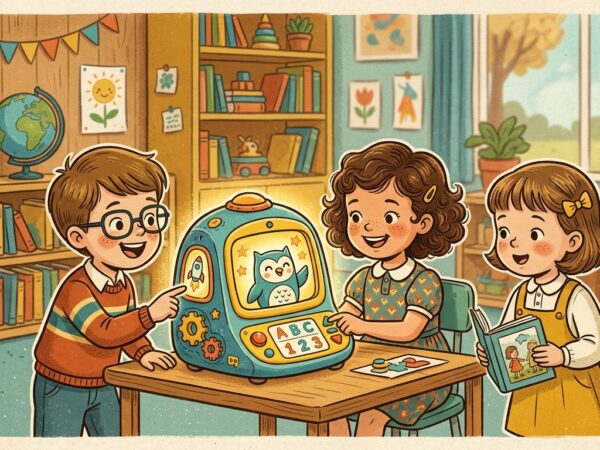
The Promise and Risks of AI in Early Education
Imagine a five-year-old named Maya sitting down at a tablet in her kindergarten classroom. The screen shows colorful animals and asks her to tap the ones with four legs. When Maya taps an eagle instead of a dog, the program doesn’t give her a big red X. Instead, it gently shows her the eagle flying, counts its legs together with her, and tries a slightly easier version of the question. Ten minutes later, Maya is laughing and has correctly identified animals with two legs, four legs, and six legs — something that might have taken days with a workbook. What Maya doesn’t realize is that a form of artificial intelligence has been quietly adapting to her specific learning pace, interests, and mistakes in real time.
Read More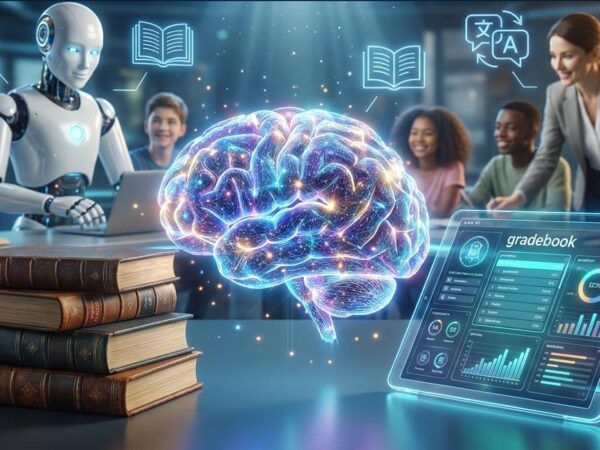
How Technology and AI Are Reshaping Education
Long before the first transistor was switched on, before fiber-optic cables threaded through city sidewalks, and centuries before any student typed a query into a chatbot, human beings were already trying to use technology to teach one another. The story of educational technology is, at its core, the story of human ambition: the persistent desire to transmit knowledge more efficiently, more accessibly, and more lastingly than word of mouth alone could achieve
Read More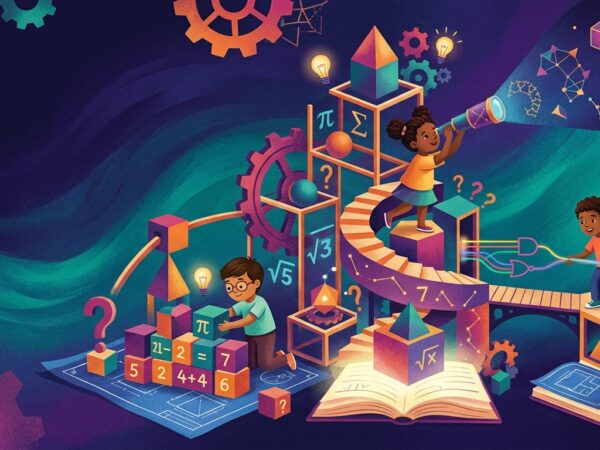
How Personality Shapes a Child’s Journey into Mathematics
For generations, mathematics education has been dominated by a single method: direct instruction of abstract symbols followed by repetitive drill. A teacher writes “3 × 4 = 12” on a board, a student copies it, and the hope is that meaning will arrive eventually. For a narrow band of learners—particularly those with strong sequential processing—this approach works well enough. For the majority, it produces confusion, frustration, and the catastrophic belief that mathematics is simply beyond them.
Read More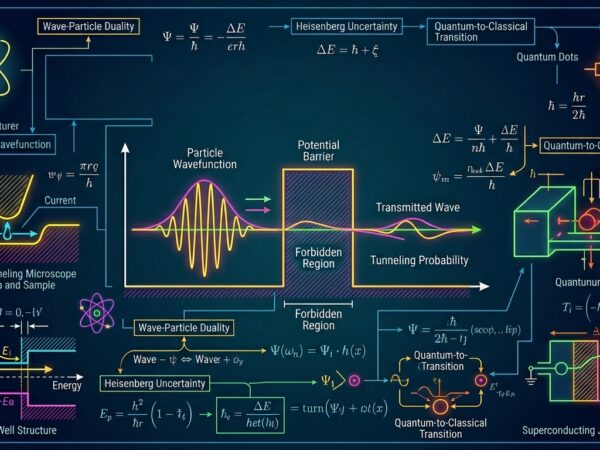
How Particles Break the Rules
Imagine throwing a tennis ball against a solid, ten-foot-thick brick wall. Classical physics—the science of the everyday world formulated by Isaac Newton—dictates a highly predictable outcome. The ball, lacking the physical energy to smash through the bricks, will simply bounce back. This is intuitive. It aligns with our daily, macroscopic experience. In the realm of classical physics, objects require sufficient energy to overcome obstacles.
Read More
Montessori vs. Waldorf vs. Reggio Emilia: A Parent’s Guide
Choosing an educational path for a child is among the most consequential decisions any parent or guardian will ever face. In an era increasingly dominated by standardized testing, algorithmic tracking, and performance benchmarking, a quiet revolution has been underway for over a century—one that insists children are not vessels to be filled, but fires to be lit. Three educational philosophies sit at the heart of this revolution: Montessori, Waldorf, and Reggio Emilia.
Read More
SR-71 Blackbird – Cold War Reconnaissance Legend
On a clear afternoon over the Mojave Desert, an air traffic controller glanced at his radar scope and blinked. The blip crossing his screen was moving at 1,942 knots — nearly 2,200 miles per hour. Below him, a Navy F/A-18 pilot had just been humbled into silence. Above him, at 85,000 feet, the crew of a Lockheed SR-71 Blackbird were simply doing their job.
Read More