Science & Technology · Aviation History
The Unattainable
Altitude
How a small team of “misfit” engineers built the fastest, highest-flying manned aircraft in history — and changed aerospace forever.
On a clear afternoon over the Mojave Desert, an air traffic controller glanced at his radar scope and blinked. The blip crossing his screen was moving at 1,942 knots — nearly 2,200 miles per hour. Below him, a Navy F/A-18 pilot had just been humbled into silence. Above him, at 85,000 feet, the crew of a Lockheed SR-71 Blackbird were simply doing their job.[1]
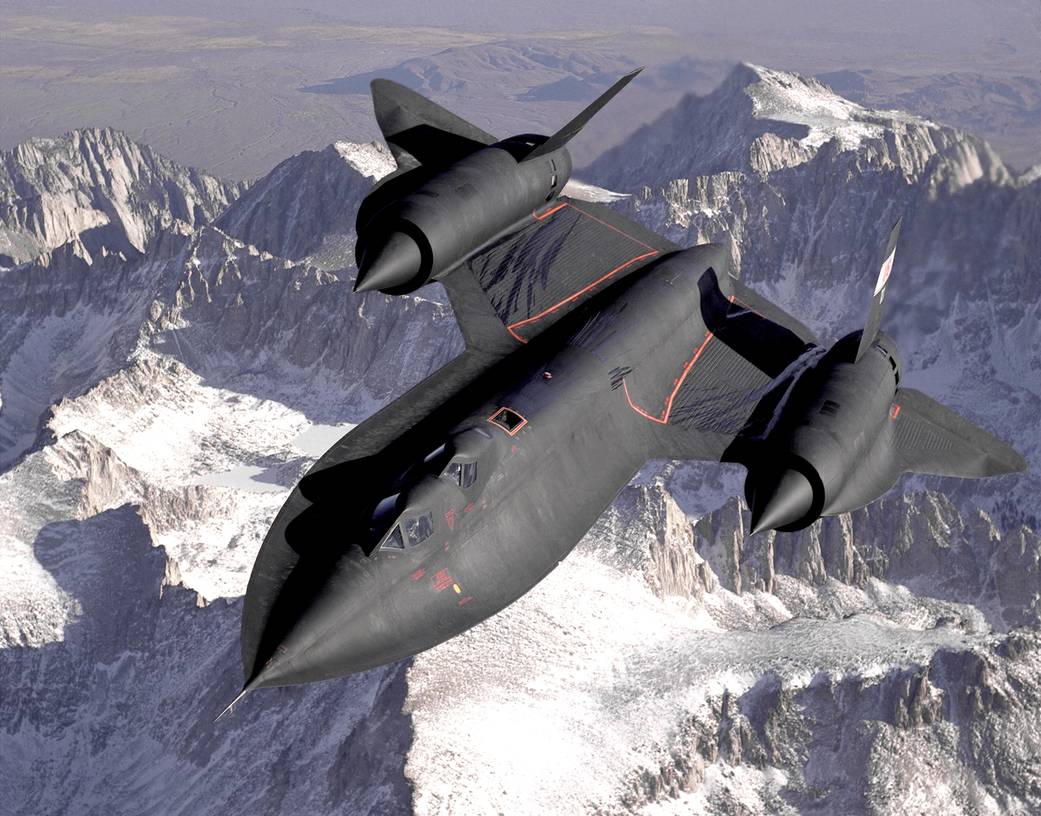
For almost thirty years, the SR-71 was the fastest, highest-flying manned air-breathing aircraft ever built. It flew so fast that incoming missiles could not catch it. It flew so high that pilots needed pressure suits identical to those worn by Apollo astronauts. Its skin grew so hot in flight that it glowed dull red. And yet, records set in 1976 remain unbroken today — more than six decades after the aircraft’s first flight.[2]
This is the story of how it was built, how it worked, and why it still matters.
Origins: The Day the U-2 Fell
The SR-71’s story begins with a catastrophe. On May 1, 1960, CIA pilot Francis Gary Powers was cruising at 70,000 feet over Sverdlovsk, Soviet Union, in a U-2 reconnaissance aircraft — then believed to be invulnerable at altitude. A Soviet SA-2 surface-to-air missile shattered that assumption, along with the aircraft. Powers parachuted into captivity, and the Cold War’s intelligence community was left scrambling.[3]
The message was clear: high altitude alone was not enough. What the U.S. needed was a platform that combined altitude with velocity — something so fast that no missile, no matter how advanced, could physically intercept it. That requirement landed on the desk of Clarence “Kelly” Johnson, the legendary head of Lockheed’s Advanced Development Projects division — a secretive enclave in Burbank, California, known simply as the Skunk Works.[4]
“We were a small group of people who believed that the best way to get things done was to keep it simple, keep it secret, and work like hell.” — Clarence “Kelly” Johnson, Skunk Works founder
The Skunk Works earned its name from the olfactory assault of a nearby plastics factory — a reference the team borrowed from a moonshine distillery in the Li’l Abner comic strip. Operating under 14 strict management rules designed to ruthlessly eliminate bureaucracy, Johnson’s hand-picked team of roughly 200 engineers were given an almost impossible mandate: design an aircraft that could sustain Mach 3 cruise above 80,000 feet.[5] What followed was one of the most audacious engineering programs in human history.
Engineering the Impossible
The Titanium Problem
At Mach 3, air friction heats the skin of an aircraft to over 600°F (315°C) — hot enough to melt conventional aluminum airframes. The Skunk Works team determined that the only practical solution was titanium: lightweight, extraordinarily strong, and heat-resistant. There was just one problem. In the early 1960s, titanium was fiendishly difficult to machine. Standard drill bits shattered against it. The chlorine in Burbank’s municipal tap water caused the metal to corrode. Engineers had to use distilled water and special tools throughout fabrication.[6]
Then came the supreme irony: the world’s largest accessible deposits of high-quality titanium ore lay in the Soviet Union. To build their spy plane, the CIA was compelled to establish a network of shell companies — fake businesses operating through third-party nations — to covertly purchase raw titanium ore from the very country they intended to photograph with the finished aircraft.[7] Approximately 85% of the final airframe was titanium alloy, with the remaining 15% composed of advanced composite materials.
The Leaking Airplane
One of the SR-71’s most counterintuitive design features was that it was built to leak. At Mach 3 temperatures, the titanium airframe expands significantly — by several inches across the full length of the fuselage. If engineers had assembled the panels with tight tolerances on the ground, the thermal expansion at speed would warp or crack the structure. Instead, they deliberately left the panel joints loose.[8]
The consequence was visible on every ramp: the SR-71 dripped fuel continuously while on the ground. Maintenance crews placed absorbent pads under the aircraft as a matter of routine. It was only once the aircraft accelerated into the high-Mach regime, and the metal heated and expanded, that the seams sealed themselves tight. Critically, the aircraft used a bespoke fuel called JP-7 — engineered with an extremely high flashpoint specifically so that it would not combust from the sheer heat of the metal around it, or from a stray spark during the inevitable ground leakage.[9]
⚡ Technical Note — JP-7 Fuel
JP-7 was so thermally stable that it required the injection of a chemical ignition agent (triethylborane, or TEB) to start the engines. Each engine carried a limited supply of TEB cartridges, meaning pilots had a finite number of engine starts available per flight. Pilots had to plan fuel stops and engine relights with exacting precision.
The Heart of the Beast: The J58 Turbo-Ramjet
The SR-71 was propelled by two Pratt & Whitney J58 engines — perhaps the most extraordinary powerplants ever installed in a production aircraft. They were not conventional turbojets. At low speeds, they operated as standard afterburning turbofans. But as the aircraft accelerated beyond Mach 2.2, a series of bypass tubes opened, diverting a large fraction of intake air around the core compressor stages and directly into the afterburner section. The J58 effectively converted itself into a continuous-bleed ramjet.[10]
At the front of each engine nacelle sat a large, moveable conical spike. At subsonic speeds the spike extended fully forward. As the aircraft accelerated toward Mach 3, onboard computers retracted the spike 26 inches rearward into the inlet, precisely shaping the supersonic shockwave entering the engine. The geometry of the inlet, spike, and bypass system together created the compression necessary to sustain combustion at extreme speed.[11]
By cruising speed, the raw turbojet core contributed only roughly 17% of total thrust. The remaining 83% came from the compressive and thermal energy of supersonic airflow being managed through the inlet and afterburner system — a thermodynamic feat with virtually no parallel in aviation history.[12]
⚠ Critical Failure Mode — The “Unstart”
If the inlet shockwave collapsed suddenly, pressure would violently spill out the front of the engine — an event called an unstart. To the crew, it was as though the aircraft had been T-boned by a freight train: a violent, asymmetric yaw that could exceed the pilot’s ability to control the aircraft. Automatic restart systems were eventually developed, but unstarts remained one of the most feared events in SR-71 operations throughout the aircraft’s service life.
Stealth Before “Stealth”
When most people think of stealth aircraft, the angular F-117 Nighthawk or the flying-wing B-2 Spirit come to mind. But the SR-71 was the true pioneer of Low Observable (LO) technology, predating both by two decades.[13]
Kelly Johnson recognized early that the aircraft’s distinctive shape — particularly its chines, the sharp, forward-swept edges running the length of the fuselage — served a dual purpose. They improved aerodynamic stability at high Mach numbers, but they also deflected radar energy away from the transmitting source rather than reflecting it back. The result was a radar cross-section described in DARPA records as appearing on Soviet radar as “bigger than a bird, but smaller than a man” — an astonishing achievement for an aircraft over 107 feet long.[14]
The aircraft was finished in a deep, matte blue-black paint. This wasn’t camouflage. The coating contained microscopic iron-ferrite spheres that absorbed radar energy and converted it to heat — a direct conceptual ancestor of the Radar Absorbent Material (RAM) coatings used on modern stealth platforms. The dark color also served a thermal purpose: it helped the superheated airframe radiate heat more efficiently during high-Mach flight.[15]
The Crew: Living at the Edge of Space
Piloting the SR-71 was unlike flying any other aircraft before or since. The crew — a pilot and a Reconnaissance Systems Officer (RSO) — wore full pressure suits functionally identical to those worn by Gemini and Apollo astronauts. At 85,000 feet, the atmosphere is so thin that a cockpit depressurization would cause the nitrogen dissolved in a pilot’s blood to boil — a condition known as ebullism — within seconds.[16]
Because the aircraft’s sensors could cover over 100,000 square miles in a single hour, missions were exhausting exercises in focus and endurance. Pilots flew with their heads constantly scanning instruments while the RSO managed a suite of cameras, side-looking radar, and signals intelligence equipment.[17] The SR-71’s primary “weapon” against threats was velocity: standard procedure when a surface-to-air missile launch was detected was simply to accelerate. By the time any known missile reached the aircraft’s altitude and position, the SR-71 was already miles away, safely past the engagement envelope.
Aircraft were based primarily at Beale Air Force Base, California, under the 9th Strategic Reconnaissance Wing, with forward operating detachments at Kadena Air Base, Okinawa — nicknamed “The Habu” after a local pit viper — and at RAF Mildenhall in the United Kingdom, from which twice-weekly missions were flown to photograph Soviet nuclear submarine bases along the Arctic coast.[18]
Operational History
From its operational debut in 1966 through its retirement in 1990, the SR-71 compiled a remarkable record of intelligence collection without the loss of a single aircraft to enemy action — despite over 1,000 missiles fired at it.[3]
During the Vietnam War, beginning in 1967, SR-71s flew under “Operation Black Shield,” providing indispensable imagery of North Vietnamese SAM sites, airfields, and troop concentrations. The intelligence gathered directly informed strike planning and saved the lives of American aircrew who might otherwise have flown into undetected defenses.[19]
In 1973, during the Yom Kippur War, SR-71s flew from bases in the United States all the way to the Middle East and back — a round trip of roughly 10 hours with multiple aerial refuelings — to deliver photographic evidence of ceasefire violations directly to the President of the United States. It was a demonstration of strategic reach unmatched by any other intelligence platform of the era.[2]
The aircraft’s speed records, set formally on July 28, 1976, have never been surpassed: an absolute speed record of 2,193.16 mph (Mach 3.3) and a sustained level-flight altitude record of 85,069 feet. These records remain on the books of the Fédération Aéronautique Internationale today.[20]
| Parameter | Specification |
|---|---|
| Manufacturer | Lockheed Martin — Advanced Development Projects (Skunk Works) |
| Primary Role | Strategic Reconnaissance / High-Speed Research |
| First Flight | December 22, 1964 |
| Length | 107 ft 5 in (32.74 m) |
| Wingspan | 55 ft 7 in (16.94 m) |
| Max Gross Weight | ~172,000 lb (78,020 kg) |
| Maximum Speed | Mach 3.3+ / 2,193+ mph (3,529+ km/h) |
| Service Ceiling | 85,000+ ft (25,908+ m) |
| Combat Range | 3,200 mi (5,150 km) unrefueled |
| Engines | 2× Pratt & Whitney J58-1 Turbo-Ramjet |
| Thrust (each, A/B) | 34,000 lbf (151.2 kN) |
| Fuel Type | JP-7 (High flashpoint thermally stable kerosene) |
| Fuel Capacity | 80,000 lb (36,287 kg) |
| Airframe Composition | 85% Titanium alloy, 15% Composites |
| Skin Temperature (Mach 3) | Up to 600°F (315°C) — nose and leading edges to 1,050°F |
| Radar Cross-Section | Approx. equivalent to a large bird (classified) |
| Crew | 2 — Pilot + Reconnaissance Systems Officer (RSO) |
| Total SR-71 Airframes Built | 32 (50 total Blackbird family including A-12 and YF-12) |
| Missions Flown (Total) | 3,551 total sorties during USAF service |
| Enemy Action Losses | Zero — despite 1,000+ missile firings |
| Speed Record (1976) | 2,193.16 mph — FAI World Absolute Record (still standing) |
| Altitude Record (1976) | 85,069 ft sustained horizontal flight — FAI World Record (still standing) |
| Final Operational Flight | October 9, 1999 — Edwards AFB Open House |
Retirement and Legacy
Despite its unparalleled performance, the SR-71 was formally retired from USAF service in January 1990 — not because something faster had replaced it, but because of budget politics. Operating the small fleet cost approximately $260 million per year: each flight required a dedicated fleet of KC-135Q tanker aircraft carrying specialized JP-7 fuel, plus hundreds of maintenance personnel holding rare certifications. In the post-Cold War drawdown, the Air Force chose to fund its next-generation fighter programs instead.[9]
A secondary factor was the evolution of the U-2, the very aircraft the SR-71 had been built to replace. Upgrades gave the U-2 the ability to loiter over a target for hours and transmit digital imagery in near-real-time. The SR-71, by contrast, still used film that had to be physically recovered, flown home, and chemically developed before analysts could examine a single frame. In an age of instant digital intelligence, the SR-71’s raw speed was no longer sufficient justification for its cost.[9]
The aircraft was briefly reactivated by Congress in 1995 — over the Air Force’s strenuous objections — before being permanently grounded in 1998. NASA continued to operate three airframes for high-speed research, with the final flight of any Blackbird taking place on October 9, 1999, at Edwards Air Force Base.[3]
Today, surviving SR-71s stand in museums across the country: at the Smithsonian’s Udvar-Hazy Center, the National Museum of the U.S. Air Force at Wright-Patterson, the Pima Air & Space Museum, and several other institutions. They remain among the most visited exhibits wherever they reside — a testament to the visceral impact of a machine that still looks, decades later, as though it arrived from the future.
As the United States and its rivals race toward a new generation of hypersonic vehicles — platforms intended to operate at Mach 5 and beyond — engineers and aerodynamicists still study the SR-71’s inlet design, its thermal management solutions, and its radar-defeating geometry. The Blackbird was not merely an aircraft. It was a proof of concept: evidence that if you give a small team of brilliant people extraordinary latitude, extraordinary things become possible.[5,6]
References
- Shul, B. (1994). Sled Driver: Flying the World’s Fastest Jet. Gallery Books. [SR-71 Speed Check Narrative]
- NASA Armstrong Flight Research Center. (2021). SR-71 Blackbird Fact Sheet. NASA.gov.
- Cosmosphere. (2025). The Lockheed SR-71 Blackbird’s Unforgettable Goodbyes.
- LesDiy. (2026). Kelly Johnson: The Genius Behind the SR-71 Blackbird and the Skunk Works.
- Rich, B. R., & Janos, L. (1994). Skunk Works: A Personal Memoir of My Years at Lockheed. Little, Brown and Company.
- Defense Technical Information Center (DTIC). (2017). J58 Engine Propulsion System Analysis.
- Central Intelligence Agency (CIA). (n.d.). The A-12 Oxcart. CIA Reading Room.
- Lockheed Martin. (2020). Fastest Plane in History: The Blackbird. LockheedMartin.com.
- National Security Journal. (2025). The Real Reason the Mach 3 SR-71 Blackbird Was Retired.
- Pratt & Whitney. (n.d.). J58: The Powerplant for the Blackbirds.
- DARPA. (n.d.). Stealth Aircraft: The XST and SR-71 Influence.
- Evergreen Museum. (n.d.). SR-71 Blackbird Exhibit and Technical Summary.
- Aviation Week Network. (2026). From The Archives: SR-71 Operational Assignment Ends.
- Code One Magazine. (2011). Absolute Blackbirds: Breaking World Records.
- Pima Air & Space Museum. (n.d.). Lockheed SR-71A Blackbird History.
- Stratos. (2025). High-Altitude Flight Data and Atmospheric Research.
- WVI / SR-71 Webmaster. (n.d.). SR-71 Operations at RAF Mildenhall, UK.
- EBSCO / History.com. (n.d.). Science Research Starters: Lockheed SR-71 Blackbird.
- Air Force Aid Society (AFAS). (2017). General Henry H. Arnold Grant: SR-71 Biography.
- Fédération Aéronautique Internationale (FAI). (n.d.). World Air Speed and Altitude Records — Class C Landplanes. FAI.org.